

My Partner Says They Don't Love Me Anymore. Is the Relationship Over?
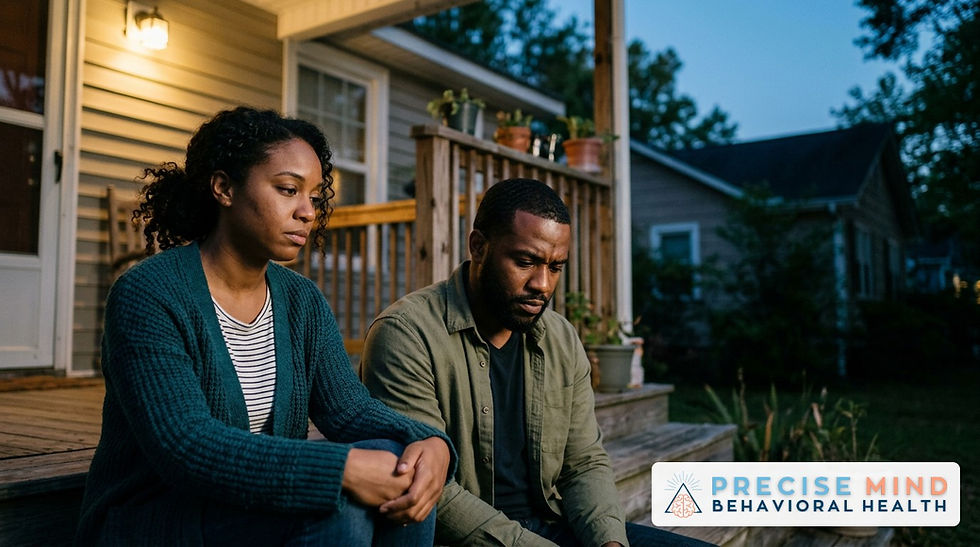
It might have come out in the middle of an argument. Or maybe it came on an ordinary weeknight, in a voice so calm it scared you more. Either way, the words are stuck on replay, and one thought keeps crowding out everything else: my partner doesn't love me anymore.
If that's where you are, take one slow breath before you read on. A sentence like this can feel like the end of the story. Often, it's closer to the start of a hard and important conversation.
Below is what those words can mean, what helps in the first few days, and how to think about what comes next. It's educational, not a substitute for your own care.
Why You Don't Have to Settle Anything Tonight
When someone you love says they don't love you, your body can react as if you're in danger. Your heart races, sleep disappears, and your mind hunts for a fix. That alarm is normal, but it's a poor guide for big conversations.
Many people then start panic-negotiating: promising to change everything, asking the same question over and over, or demanding an answer about the future. It makes sense, but it tends to push a doubtful partner further away.
For tonight, aim smaller. You might say:
"I heard you. I'm hurt, and I don't want to say something I'll regret."
"I want to understand what you mean. Can we talk tomorrow, after we've both slept?"
"I won't pressure you tonight. I do want us to keep talking."
Then do one thing that calms your body, like a shower, a walk, or a call to someone you trust.
What Can It Mean When Your Spouse Says They Don't Love You?
"My spouse says they don't love me" can feel like a final verdict. But people use those words to describe very different situations, such as:
Exhaustion or burnout: "I have nothing left for anyone." A new baby or caring for a sick parent can flatten every feeling.
Resentment: "I've been angry for a long time and never said it."
Emotional disconnection: "We feel like strangers," after years of schedules and bills with little closeness.
Low mood or numbness: "I don't feel much of anything." Depression can dull feelings toward everyone, including a spouse.
Ambivalence: "I don't know what I feel, and that scares me."
Feelings for someone else: "My heart is somewhere else," which may point to an affair.
A real decision: "I've thought about this for a long time, and I want to leave."
Listen for feeling words versus decision words
"I'm not in love with you right now" describes a feeling, and feelings can move. "I want a divorce" or "I've signed a lease" describes a decision. Both hurt, but they call for different next steps.
Watch what they do, not only what they said
Behavior over the next few weeks usually tells you more than one sentence. Are they still coming home, parenting alongside you, and willing to talk? Or have they moved money, stopped talking, or started seeing someone new? The first picture leaves much more room.
My Partner Doesn't Love Me Anymore: What Helps in the First Few Days
Once the shock passes, the goal isn't to win your partner back by the weekend. It's to understand what's happening while keeping yourself steady.
Ask curious questions, then mostly listen
Pick a calm time. Talking side by side can feel easier than face to face. Choose one or two of these:
"When did you first start feeling this way?"
"Is it that you don't feel love for me, or that you don't feel loved by me?"
"Was there a moment when something changed?"
"Is there something you've been afraid to tell me?"
Reflecting back what you heard, like "So you've felt alone since the move," shows you're listening, even when you disagree.
Put down the pleading, chasing, and threats
Hurt people often pursue: long texts at midnight, following a partner from room to room, or saying "If you leave, I'll..." Emotionally Focused Therapy describes how pursuing tends to trigger withdrawing, which triggers more pursuing. Stepping back a little isn't giving up. It gives your partner room to move toward you.
Take care of the person who just got hurt
That's you. Protect your sleep, eat real meals, and move your body a little each day. Lean on one or two trusted people rather than telling everyone. If you can't function or you have thoughts of harming yourself, call or text 988 to reach the Suicide and Crisis Lifeline.
Hold off on big legal and money moves
Panic can push you to file papers, empty an account, or tell the kids a final version of the story. Those steps are hard to undo. Gathering information from a family law attorney is reasonable. Acting on it in the first week usually isn't.
Can Love Come Back, or Is It Time to Let Go?
How faded feelings can grow again
Romantic feelings tend to follow experience. After years of survival mode, missed reaches for attention, and unrepaired hurts, warmth fades. Research from the Gottman Institute points to friendship, turning toward each other, and repair after conflict as the ground closeness grows from. When those patterns change, love that faded from neglect can often grow again. There's no guarantee, and no one, including a therapist, can make another person feel love on command.
If your partner is unsure
Many couples arrive with a mixed agenda: one person leaning in, the other leaning out. It's reasonable to commit to a set stretch of real effort, such as a few months with regular check-ins, as long as you're treated with respect. Waiting patiently is different from waiting forever. Our post on trying marriage counseling before divorce explains discernment counseling, a short-term approach built for this split.
When letting go may be the kinder choice
It may be time to consider letting go if:
Your partner has clearly and repeatedly chosen to leave and won't take part in repair.
An affair is ongoing and they won't end it.
You've been the only one trying for many months.
You feel yourself disappearing in the effort to be loved.
If you're unsure how late is too late, read 8 signs there may still be something worth saving. Letting go isn't failure. It's a loss, and it deserves support too.
Standard couples therapy is not the right first step when there is violence, threats, coercive control, or fear of your partner. If you are in immediate danger, call 911. The National Domestic Violence Hotline is available 24/7 at 1-800-799-7233 or by texting START to 88788 (thehotline.org).
How Can Relationship Counseling Help in a Marriage Crisis?
Relationship counseling isn't a "save marriage at any cost" program. It slows things down so both of you can say what's true. The partner who said "I don't love you" can explain without being punished. The partner who's hurting gets heard without having to beg.
A couples therapist can help you sort out what changed and whether both of you want to try repair. If you do, the work turns to the patterns that drained the warmth. If not, therapy can help you part with less damage. With online couples counseling, you meet from home, which helps in small towns across Mississippi where the nearest counselor may be an hour away.
Support for the partner who is hurting
When the thought "my partner doesn't love me anymore" is running your days, you deserve help even if your partner won't come. Individual therapy gives you a place to steady yourself and decide what you want. These signs it's time to talk to a therapist can help.
Using Aetna or UnitedHealthcare During a Marriage Crisis
For Mississippi couples with Aetna or UnitedHealthcare, insurance tends to follow a diagnosis, not a heartbreak. On many plans, individual therapy for a partner struggling with symptoms like depression or anxiety is more commonly covered than relationship counseling alone. Couples sessions are more likely to be covered when they're part of treating a diagnosed condition in one partner. Many UnitedHealthcare plans have mental health benefits managed by Optum, so the behavioral health number on your card may connect you there. Aetna marriage counseling and UnitedHealthcare couples therapy benefits vary by plan, and Precise Mind will verify yours for free. Our guide to couples therapy costs explains more. This is general information, not insurance, legal, or financial advice.
Frequently Asked Questions
What does it mean when your spouse says they don't love you?
It can mean exhaustion, built-up resentment, emotional distance, low mood, confusion, feelings for someone else, or a settled decision to leave. Ask what they mean, and watch what they do in the weeks that follow.
Can feelings come back in a marriage?
Often, yes, especially when love faded from stress, neglect, or unrepaired hurt rather than a firm decision to leave. Feelings tend to return when daily patterns change and hurts get repaired. There's no guarantee, and it usually takes effort from both people.
Should I stay if my partner is unsure?
You can, as long as you're treated with respect and your partner is willing to look at what's wrong. Many people set a time frame, like a few months of real effort with check-ins, so waiting doesn't become open-ended.
Can couples counseling help someone fall back in love?
Counseling can't create romantic feelings on demand. It can help both partners understand what changed, repair old hurts, and rebuild the connection love often grows from. Whether feelings return can't be promised.
When should you let a relationship go?
It may be time when your partner has clearly and repeatedly chosen to leave, won't take part in repair, or keeps an affair going. It may also be time if you've carried all the effort for a long stretch or you feel unsafe.
Does Aetna or UnitedHealthcare cover counseling when a partner says they don't love you?
It depends on your plan. Individual therapy for a partner with symptoms like depression or anxiety is often more likely to be covered than relationship counseling alone, and couples sessions may be covered when they're part of treating a diagnosed condition. Precise Mind checks Aetna and UnitedHealthcare benefits for free.
One Sentence Doesn't Have to Be the Final Word
The thought "my partner doesn't love me anymore" can make it feel like the story is already over. Often, it isn't finished yet. Slow down, ask real questions, watch behavior over time, and care for yourself. Turning point or ending, you don't have to face it alone.
Online Couples Counseling in Mississippi With Precise Mind
Precise Mind Behavioral Health offers marriage counseling in Mississippi, Texas, and Florida by secure video, with weeknight sessions from 5 to 7 PM Central and Saturday appointments. We work with Aetna and UnitedHealthcare and verify your benefits for free before your first session.
Whether you want online couples therapy in Mississippi or support just for yourself, schedule a free 15-minute consultation or call or text (307) 207-7957.
Sources and Further Reading
The Gottman Institute: couples research on friendship and repair
International Centre for Excellence in Emotionally Focused Therapy: the pursue-withdraw cycle
Discernment Counseling: help for couples when one partner is leaning out
988 Suicide and Crisis Lifeline: 24/7 support by call or text
National Domestic Violence Hotline: 24/7 relationship safety support


Comments